
History of the Snowmobile
Snowmobiles are a common sight in colder regions and when winter sets in. They’re a fun, convenient way to travel through deep snow, serving as adventurous rides for thrill-seekers. Before these snow vehicles became winter workhorses and recreational machines, they went through decades of evolution.
In this article, we take a closer look at the incredible history of the snowmobile, from the early experiments and inventions to what we know today as powerful and reliable snow vehicles.
The Origins of Snowmobiles: Earliest Concept
Before engines were invented, indigenous populations across North America and Scandinavia relied on sleds to travel through snow. The sleds were pulled by dogs, horses and even reindeer. While useful in the day-to-day in areas isolated by snow, animal-led sleds proved difficult to manage for longer trips since animals require rest and care.
Experiments with mechanical alternatives for snow travel date back to the late 1800s, when some of the earliest concepts were developed. The sled-propeller design, for example, was pioneered by inventors William B. Follis and William J. Culman, who submitted a patent for the design in 1895, but it was never built.
An early functional iteration of the snowmobile is the improved Lombard Log-Hauler, patented in 1907. The large, steam-powered machine had one thing in common with modern snowmobiles: continuous tracks with skis at the front.
However, the first patent for a motorized sleigh dates to 1915, when Ray H. Muscott of Michigan received a patent for a snow vehicle with rear tracks and front skis. At this time, many inventors modified Ford Model T undercarriages to drive over snow. Virgil D. White, a resident of New Hampshire, received a patent for his Model T Snow Flyer conversion kit in 1917.
The Birth of the Modern Snowmobile
It wasn’t until internal combustion engines became widespread in the 1920s that the invention of the modern snowmobile took off. While the Canadian inventor, Joseph-Armand Bombardier, is widely credited with inventing early snowmobile models in the 1930s, he’s not the true father of the modern snowmobile. Years before him, Carl Eliason of Wisconsin developed the first prototype of the single-track, one-passenger snowmobile.
By the 1930s, Bombardier had created several snow vehicles that used the same rear tracks and front skis concept. They were designed for rural transportation and had little resemblance to today’s snowmobiles. Bombardier’s inventions were large, enclosed vehicles that could hold up to seven passengers and served as a lifeline in places isolated by snow. Some served as school buses for children, and others ferried doctors, mail and other needed supplies.

The 1940s: Wartime Snowmobiles
World War II saw widespread military use of snowmobile-type machines, temporarily pausing consumer production until the post-war years. Four Wheel Drive Company (FWD) acquired Eliason’s patent after he received a Finnish order for 200 vehicles he couldn’t fulfill on his own. The deal fell through, and FWD ultimately mass-produced the vehicles for the U.S. Army in 1941.
During the war, armies quickly realized that traditional wheeled vehicles weren’t practical in deep snow. This issue pushed engineers to design more snow vehicles. Some of the most notable models from the time are:
- Soviet Aerosan: These popular snow machines were developed by the Soviet Union and extensively used on the Eastern Front. Instead of the common tracks-and-skis combination, the Soviet Aerosan models used front and rear skis and were powered by aircraft propellers attached to the back.
- The Weasel: The U.S. Army Weasel was a snow-capable, tracked vehicle that resembled a tank more than a snowmobile. However, it had a continuous rubber track system, a technology that influenced later snowmobile design. The vehicle helped transport troops and cargo across snow and other rough terrains.
- Canadian snow vehicles: Canada also experimented with military snow vehicles during WWII. Bombardier himself worked with the military to adapt his enclosed snow vehicle designs to military use.
The Rise of Major Brands Post-War
After WWII, advancements in engines and manufacturing resulted in a shift from bulky snow vehicles to lighter, faster and more reliable snowmobiles.
While Bombardier’s first models served as snow vehicles, unlike Eliason’s models, which were more like today’s snowmobiles, he later designed the Ski-Doo® snowmobile. Ski-Doos were small, affordable, one-person snow rides that went public in 1959. This vehicle perfectly resembled the modern-day snowmobile and became a huge success.
Owing to the success of the Ski-Doo, other companies rushed similar versions into production, essentially marking the beginning of recreational snowmobiling. Here are other top contenders after Ski-Doo:
- Polaris Industries: Founded in Minnesota in 1954, Polaris launched its first snowmobile, the Sno-Traveler, in 1956. After the failure of the 1964 Comet, Polaris pushed the boundaries of innovation with its 1965 Mustang and 1976 TX-L340. These were lighter, high-performance models that made Polaris a dominant name in the industry.
- Arctic Cat: Arctic Cat snowmobile history is marked by success, innovation and performance. The iconic brand introduced its first line in 1962. Over the years, the Arctic Cat chassis improved, making them lighter and more comfortable. Models such as the Arctic Cat Kitty Cat became household names by opening up recreational snowmobiling to children.
International Industry Growth
While American brands dominated the industry early on, it wasn’t long before international companies entered the scene. Some of the iconic brands that shaped the history of snowmobiles include:
- Lynx: Lynx snowmobile history dates back to 1968 with the establishment of the Finnish manufacturer. While the company initially produced rugged machines suited to the Scandinavian terrain, it quickly gained popularity for durability and performance. The company later became part of Bombardier Recreational Products, extending Lynx’s sled reach.
- Alouette: Alouette snowmobile history is short — production lasted from 1967 to 1976. However, these innovative snowmobile models remained a household name in the ‘60s and ’70s. The Canadian snowmobile manufacturer became known for advanced innovations, such as front suspension and disc brakes.
- Ariens: Like Alouette, Ariens’ snowmobile history is short but marked by innovative designs. The limited production ran from 1969 to 1973, producing powerful models, such as the 1972 Ariens 340s.
The Golden Age of Snowmobiling
By the early 1970s, snowmobiling had become an explosive cultural force. Snowmobiles were everywhere across North America and parts of Europe. What began as a practical solution to winter transportation had quickly transformed into one of the most celebrated recreational activities in cold-weather regions.
At its peak, the snowmobile industry sold over 2 million units between 1970 and 1973, with the United States and Canada leading the market.

1. Trail Systems and Snowmobile Clubs
One reason for snowmobiling’s popularity in the ‘70s and ’80s was the rise of organized trail networks and community clubs for enthusiasts. Local governments, snowmobile associations and volunteers worked together to establish thousands of miles of groomed trail systems across snowy regions. States such as Michigan, Minnesota, New York and Wisconsin actively invested in the trail infrastructure to attract winter tourism.
In addition, snowmobile clubs popped up everywhere, creating social events, organizing group rides, races and maintenance activities. During the 1970s boom, these clubs played a big role in establishing safety practices and a sense of community.
2. Technological Leaps
During this proverbial golden age, snowmobiles witnessed increased innovation as competition for the lucrative market grew. Some of the major upgrades during this time were:
- Higher engine power and reliability.
- Improved braking and steering control.
- Stronger suspension systems for steering control.
- Better track designs for traction.
Manufacturers refined two-stroke engines, which allowed them to design faster machines that remained relatively lightweight. The suspension technology also achieved better flexibility and improved performance in uneven terrain and bumps. These advances made riding more comfortable and encouraged longer rides and racing.
3. Snowmobile Racing
The 1970s were also a time when snowmobile racing became a major spectator sport. It was common for people to attend track racing events and follow closely on cross-country endurance racing. Considering these races were a huge public spectacle that highlighted top-performing brands and models, manufacturers became highly invested in showcasing their abilities. Racing success translated into consumer sales.
For example, Arctic Cat El Tigre, one of the best Arctic Cat snowmobile models, became popular for its race circuit achievements thanks to the model’s powerful engine and lightweight design. The same went for Lynx, which became legendary on the race circuits due to its speed and power.
4. Pop Culture and Tourism
Snowmobiles weren’t just found on trails — they also appeared in movies, commercials and music videos. Winter resorts marketed snowmobile tours as wholesome experiences for families. Manufacturers ran with the craze and released stylish designs in rapid succession. Pop culture cemented snowmobiling as a symbol of outdoor fun.
5. Economic Impact
The snowmobile boom of the ‘70s and widespread usage throughout the ’80s created thousands of jobs in manufacturing, dealership and tourism. In small northern towns, snowmobile tourism brought in critical seasonal revenue. Restaurants, gas stations and repair shops benefited from the surge of recreational riders frequenting trail networks.

The Modern Snowmobile Era
Recessions in the 1980s reduced recreational spending and cooled down snowmobile sales, forcing many manufacturers to shut down, merge or move on to other areas. Besides economic pressures, the snowmobile novelty wore off. Environmental concerns involving noisy engines and high emissions also contributed to the decline.
That said, snowmobiles didn’t phase out entirely. They became a niche hobby and still remained a popular winter activity. With the technological advancements of the 2000s, snowmobiles also transformed into ultra-modern power machines.
Some of today’s technological leaps in the snowmobile industry include:
- Cleaner engines: Four-stroke engines have become mainstream, reducing emissions and improving fuel efficiency. Advanced technologies like the BRP E-TEC technology were also introduced to make two-stroke engines cleaner.
- Lightweight materials: Technology has changed drastically since the ‘70s and ’80s. Manufacturers today excel in complex designs and have adopted much lighter materials such as aluminum and composites.
- Specialized machines: Modern snowmobiles are no longer a jack of all trades. Manufacturers are now building specialized models designed for specific activities and environments such as trails, deep mountain snow and heavy work.
- Digital and comfort features: Snowmobiles now blend performance with technology. Features such as GPS navigation, advanced braking systems and heated seats are common.
Snowmobile FAQs
The snowmobile has a long and exciting history. Here are some of the most common questions people ask when diving into the history of snowmobiles:
What Is the Oldest Snowmobile?
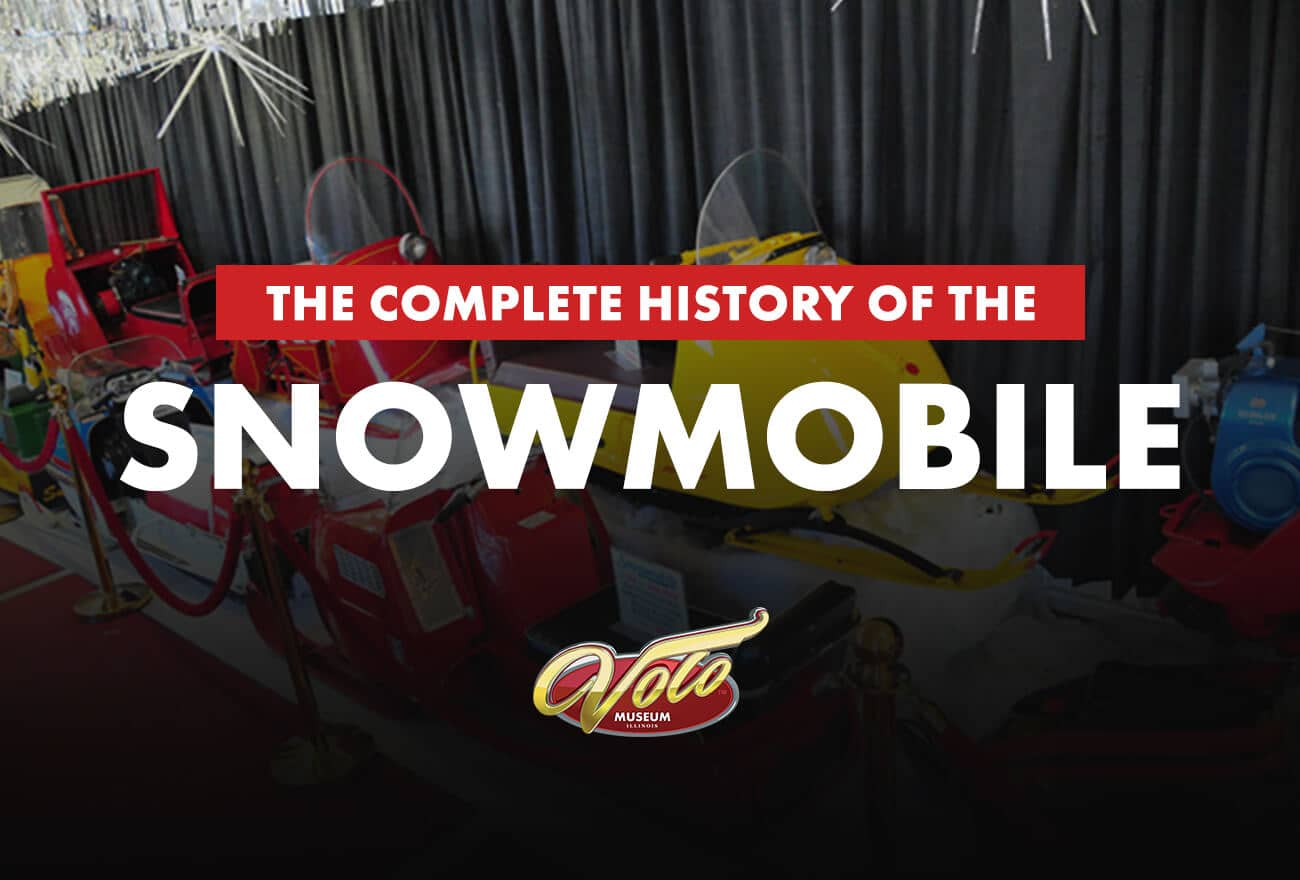
The oldest snowmobiles were far from today’s powerful, high-speed personal rides. Most were large, clunky converted cars or toboggans outfitted with motors. Few of these original models remain, and even fewer are in operating condition. If you’re curious to see what they looked like, you can visit our vintage snowmobile exhibit!
Why Was the Snowmobile Invented?
Although each inventor had a unique reason for developing their snowmobiles, the ultimate goal was easy snow travel. Before the snowmobile’s invention, people could only travel in snow using snowshoes, skis or dogsleds. While these methods worked, they weren’t nearly as fast as motorized snowmobiles.
What Are the Top Snowmobile Brands?
Today’s snowmobile market is significantly more diversified than when snowmobiles first became commercially available. Out of the long list of today’s snowmobile brands, the major players include Polaris, Bombardier Recreational Products, Yamaha, and Arctic Cat.
What’s the Difference Between a Snowmobile and a Snow Bike?
While snowmobiles are broad and resemble jet skis, snow bikes look like a cross between a snowmobile and a dirt bike. Snow bikes are smaller and narrower than snowmobiles, allowing you to explore areas that are too small for snowmobiles to fit. Unlike snowmobiles, snow bikes are exclusively recreational vehicles. In general, they’re too small for transporting things through the snow.
See Vintage Snowmobiles at the Volo Museum
Want to get a real blast from the past? Visit the Volo Museum to see our vintage snowmobile collection in person. We’ve got everything from Ford Model Ts equipped with the Snow Flyer modification to unique custom vehicles. Plus, all our display equipment is fully functional, making it even more exciting to view.
Check out our website for more information on planning your visit!