The Fast and the Furious:
Where a Global Phenomenon Began
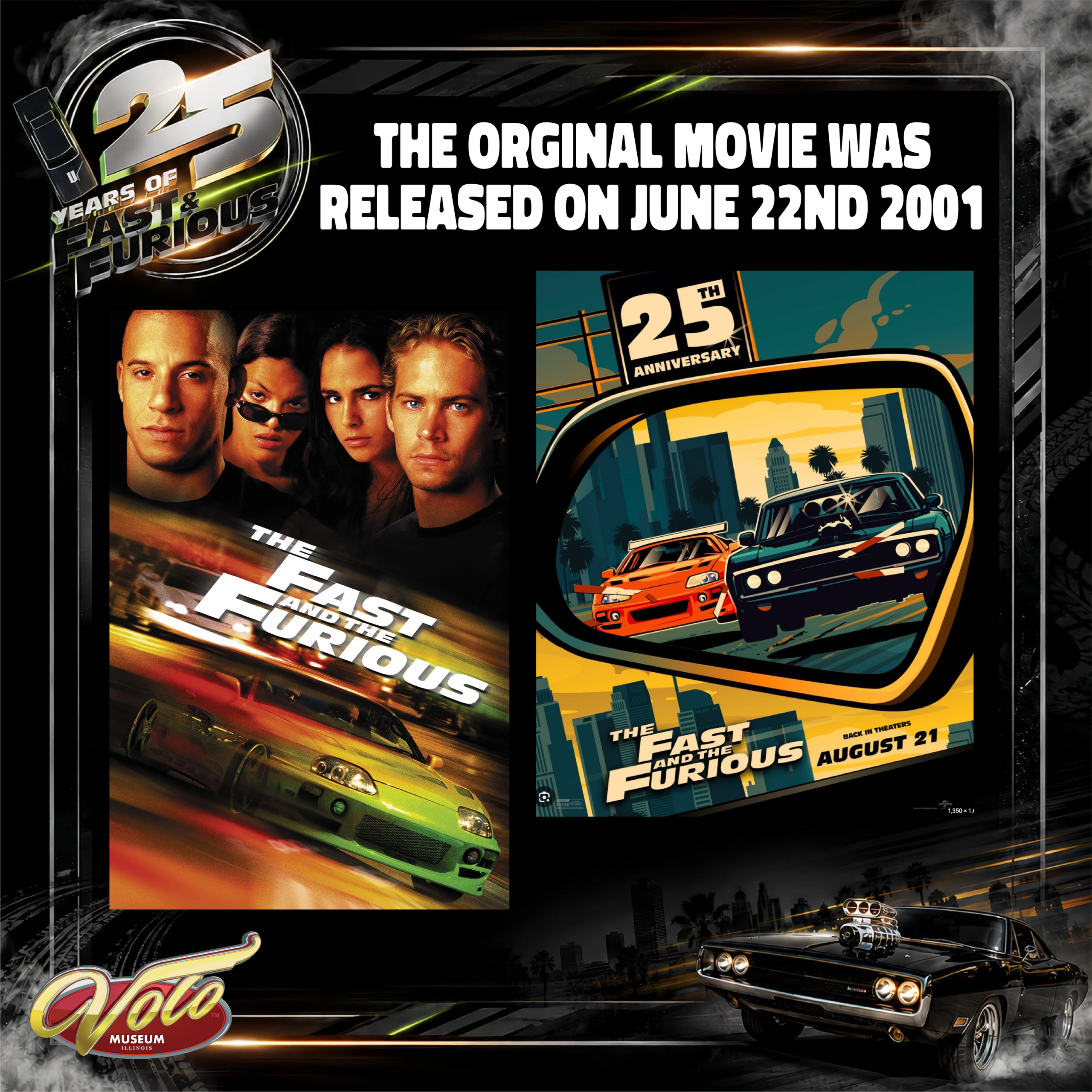
When The Fast and the Furious raced into theaters on June 22, 2001, few could have predicted the cultural phenomenon it would become. What started as a street-racing action film inspired by Southern California’s underground car scene quickly evolved into one of the most successful franchises in movie history. The original film introduced audiences to a cast of unforgettable characters, high-performance imports, and a world where speed, loyalty, and family mattered above all else.
At the heart of the film were Dominic Toretto, Brian O’Conner, Letty Ortiz, and Mia Toretto—characters who would become icons for an entire generation of automotive enthusiasts. The movie’s blend of adrenaline-fueled racing, tuner-car culture, and emotional storytelling resonated with fans worldwide, helping launch a franchise that would span multiple sequels, spin-offs, and billions of dollars at the global box office.
Twenty-five years later, the original film remains a defining moment in automotive and pop-culture history. Its influence can still be seen at car shows, enthusiast gatherings, and museums where fans celebrate the vehicles and stories that made the franchise legendary. From modified imports to classic muscle cars, the legacy of The Fast and the Furious continues to inspire new generations of gearheads and movie lovers alike.
The Hero Car That Survived the Fast & Furious Legacy
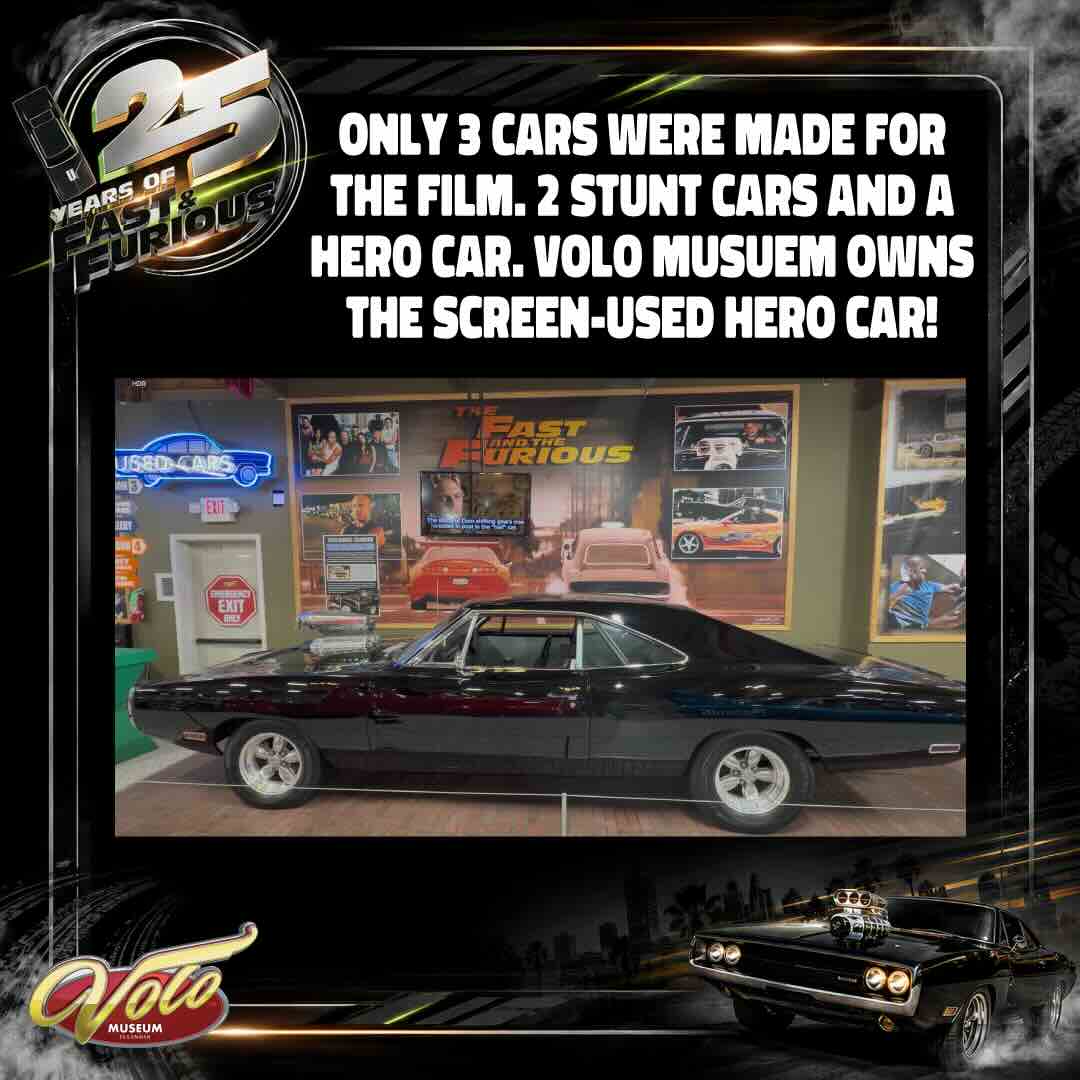
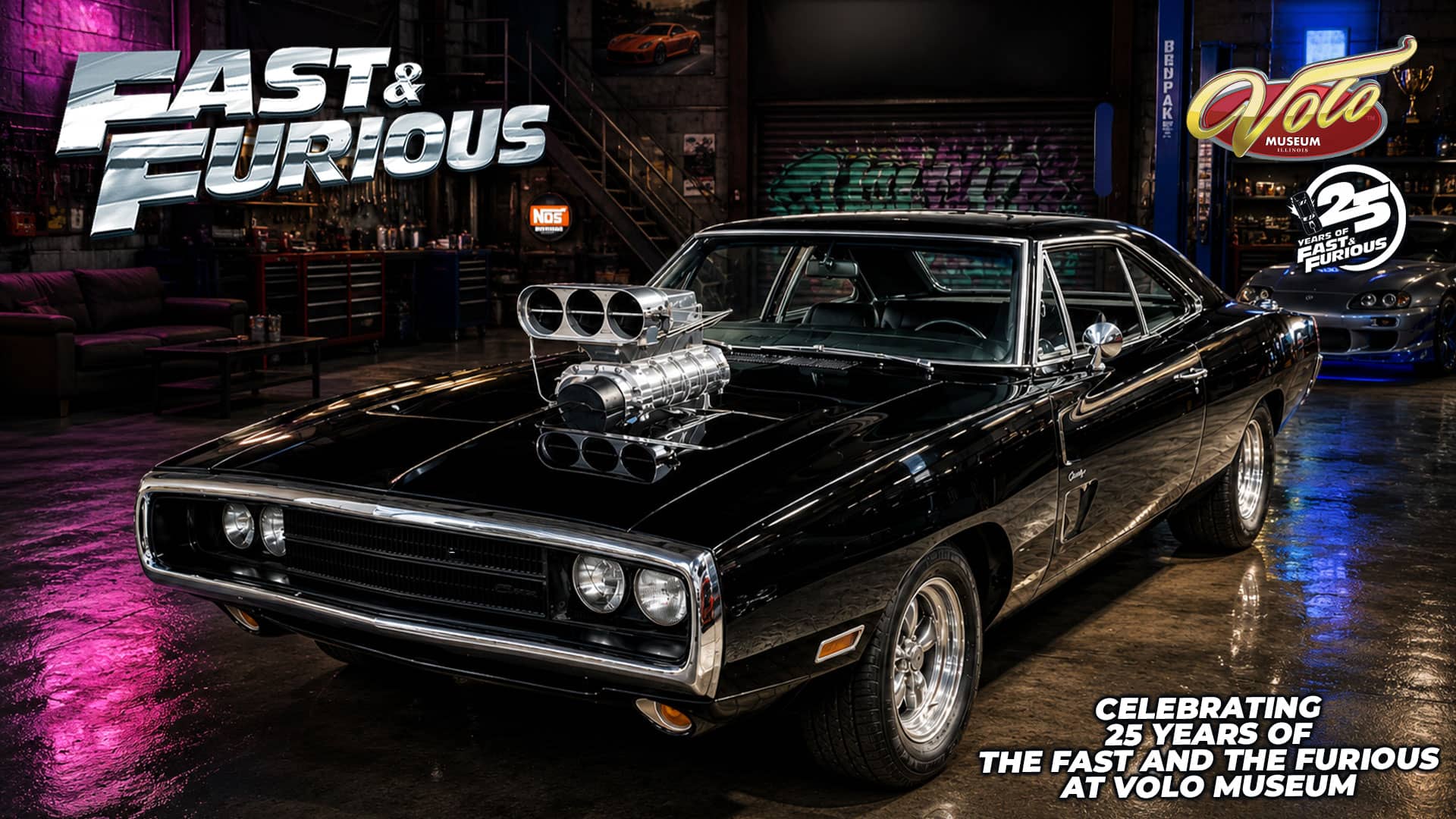
Movie cars often live hard lives. During production, multiple versions of the same vehicle are typically built to handle different filming needs, from high-speed action scenes to close-up camera work. For The Fast and the Furious, only three examples of Dominic Toretto‘s iconic black Dodge Charger were created—two stunt cars and one hero car used for detailed screen appearances.
While the stunt cars were designed to withstand the punishment of filming, the hero car served as the centerpiece of many of the movie’s most memorable moments. It represented Dom’s prized possession, a vehicle deeply connected to his family history and one of the most recognizable muscle cars in cinematic history. The Charger quickly became a symbol of the franchise, embodying raw power, American muscle, and the importance of family that would become central themes throughout the series.
Today, surviving screen-used vehicles from the original film are incredibly rare. The fact that the Volo Museum is home to the original screen-used hero car gives fans a unique opportunity to see a genuine piece of movie history up close. More than just a prop, the Charger stands as a tangible connection to the film that launched a global phenomenon and inspired countless enthusiasts to pursue their own automotive dreams.
Building a Blockbuster on a Modest Budget
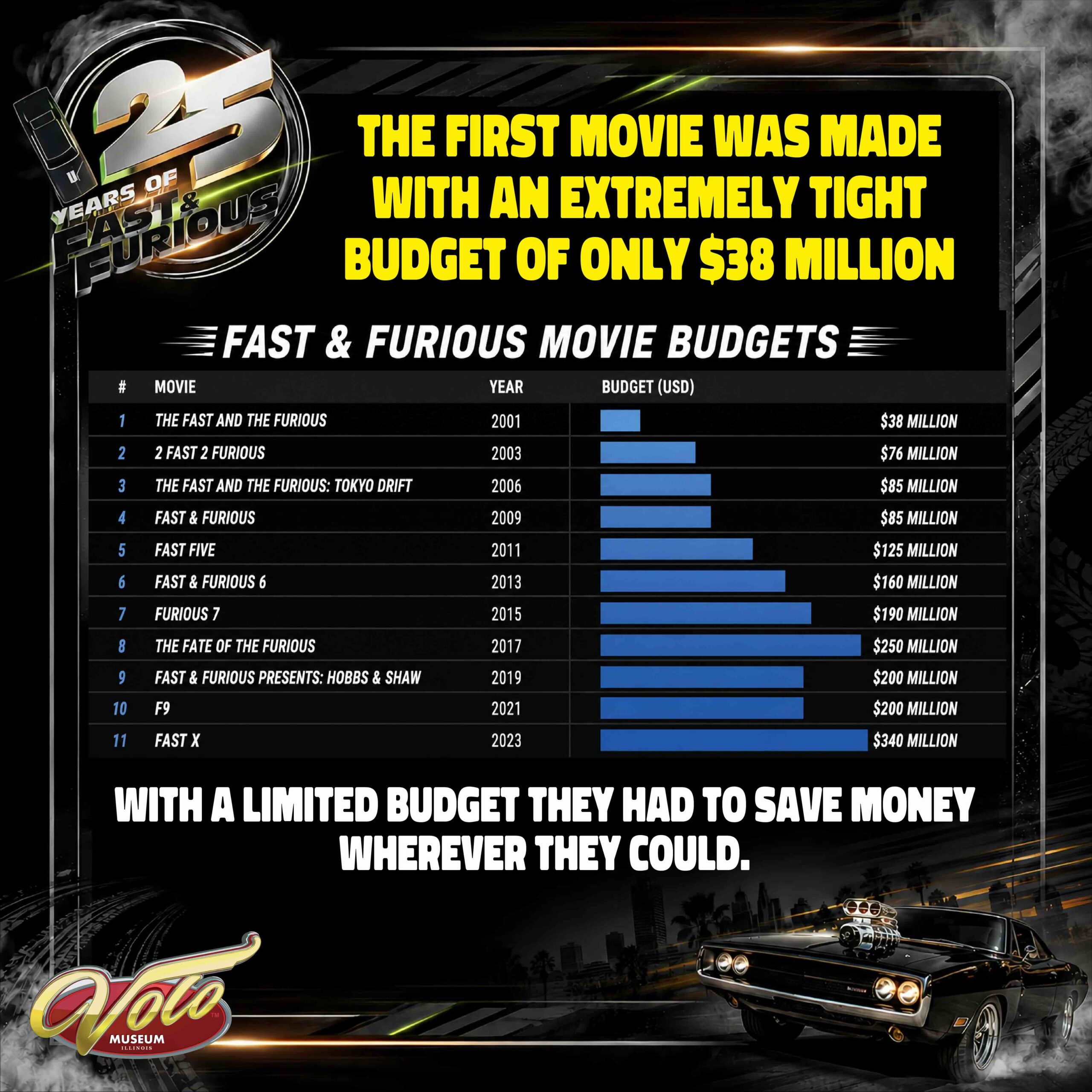
Looking at today’s blockbuster budgets, it’s hard to imagine that The Fast and the Furious was produced for just $38 million. Compared to later entries in the franchise—which would eventually command budgets exceeding $200 million and even $300 million—the original film was created with relatively limited resources. Every dollar had to count, forcing filmmakers to be creative in how they brought the action-packed world of street racing to life.
Rather than relying heavily on expensive visual effects, the production leaned on practical stunts, real vehicles, and authentic locations. Many of the cars featured in the movie came directly from the enthusiast community, helping the filmmakers capture the look and feel of Southern California’s street-racing culture while keeping costs under control. This grassroots approach gave the film a level of authenticity that resonated with audiences and distinguished it from other action movies of the era.
Ironically, the budget limitations may have helped create the magic that made the first film so memorable. The focus remained on the cars, the characters, and the culture rather than spectacle alone. As the franchise grew into a global phenomenon, budgets expanded dramatically to support increasingly ambitious action sequences, international filming locations, and cutting-edge effects. Yet many longtime fans still point to the original movie as the most authentic entry in the series—a reminder that passion and creativity can often accomplish more than a massive production budget.
Hollywood Magic Under the Hood
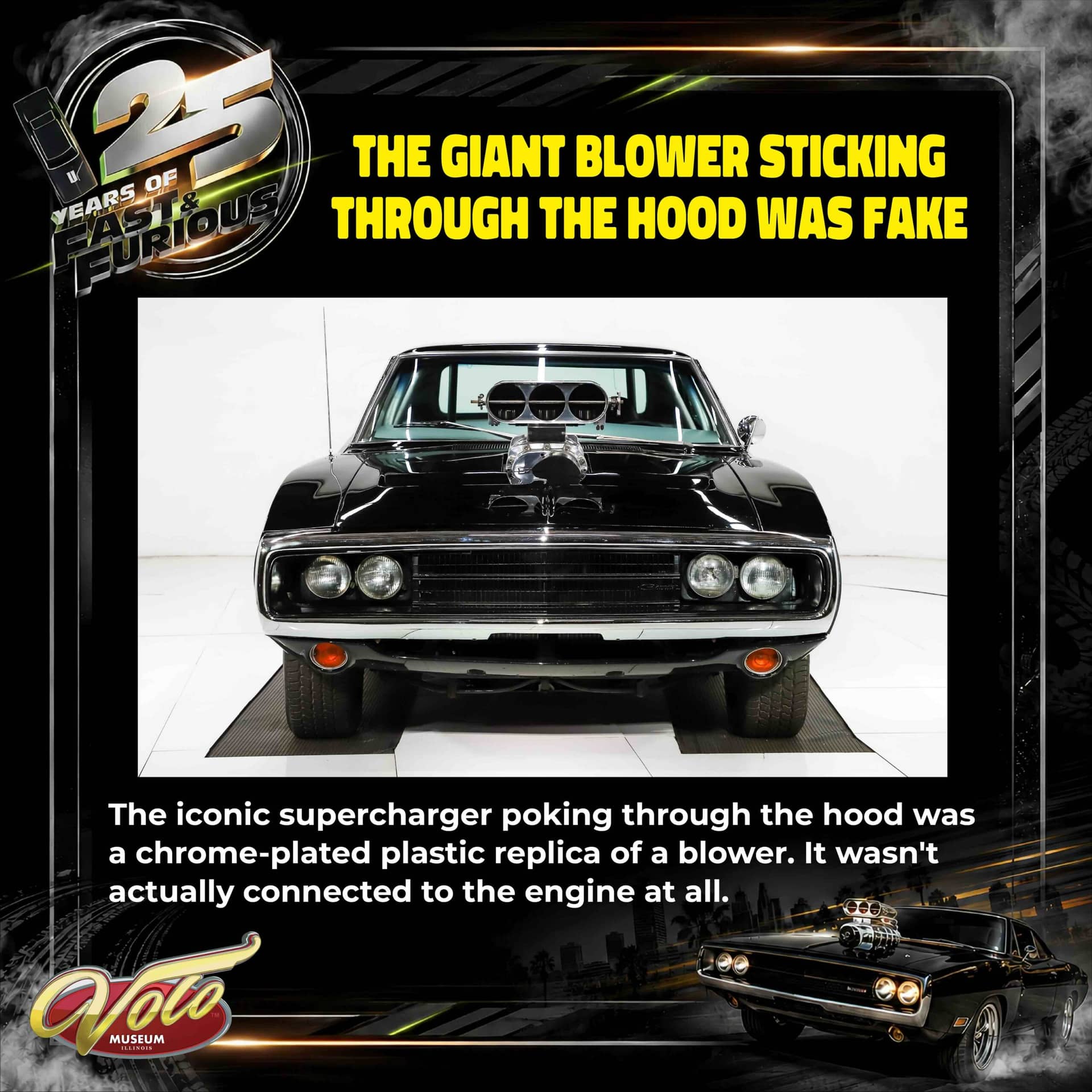
One of the most memorable features of Dominic Toretto’s black Dodge Charger is the massive supercharger protruding through the hood. It instantly became one of the most recognizable visual elements in the entire Fast & Furious franchise, helping transform the Charger into an automotive icon. To moviegoers, it looked like a monstrous engine built for pure speed and intimidation.
The reality, however, is a perfect example of movie-making ingenuity. The dramatic blower assembly visible on the car was actually a lightweight chrome-plated replica designed specifically for filming. Rather than functioning as a true engine component, it served as a visual effect that gave the Charger an aggressive appearance while simplifying production requirements. For filmmakers working with a limited budget, creating the illusion of extreme horsepower was far more practical than engineering a fully functional setup for every scene.
Even though it wasn’t mechanically connected to the engine, the faux supercharger accomplished exactly what it was intended to do—it made the Charger unforgettable. More than two decades later, fans still immediately associate that towering blower with Dominic Toretto and the original film. It remains one of the best examples of how clever design and cinematic storytelling can create an enduring icon without relying on expensive engineering.
Not Everything Under the Hood Was What It Seemed
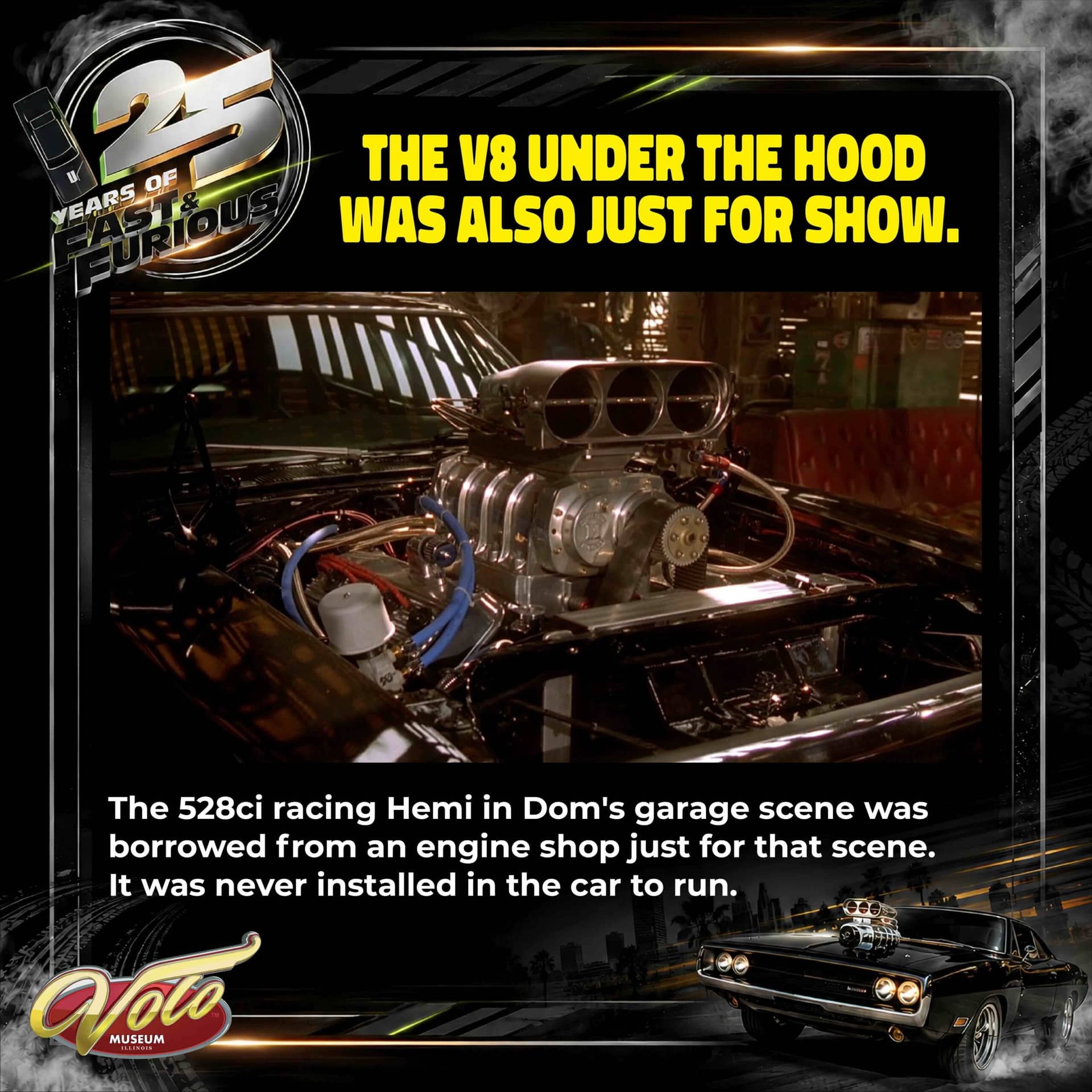
The original Fast and the Furious may have celebrated horsepower and performance, but many of the mechanical details seen on screen were carefully crafted movie illusions. One of the most famous examples appears during the garage scenes, where viewers are shown what appears to be a massive 528-cubic-inch racing Hemi engine destined for Dominic Toretto’s legendary Charger. The oversized powerplant helped reinforce the idea that Dom’s car was an unstoppable force waiting to be unleashed.
In reality, the engine was borrowed specifically for filming and served as a visual centerpiece rather than a functioning component of the car. It was never actually installed as the vehicle’s operational powerplant. Like many movie props, its purpose was to communicate power and performance to the audience while helping tell the story. The filmmakers understood that enthusiasts would instantly recognize the significance of a giant racing Hemi, making it the perfect visual shorthand for the Charger’s feared reputation.
This behind-the-scenes detail highlights the balance between authenticity and storytelling that helped make the original film so successful. While the production embraced real car culture, it also wasn’t afraid to use cinematic techniques to enhance the legend surrounding Dominic Toretto and his Charger. In many ways, these creative choices helped transform the car from a simple movie prop into one of the most iconic vehicles in film history.
The Wheelie That Fooled Millions of Moviegoers
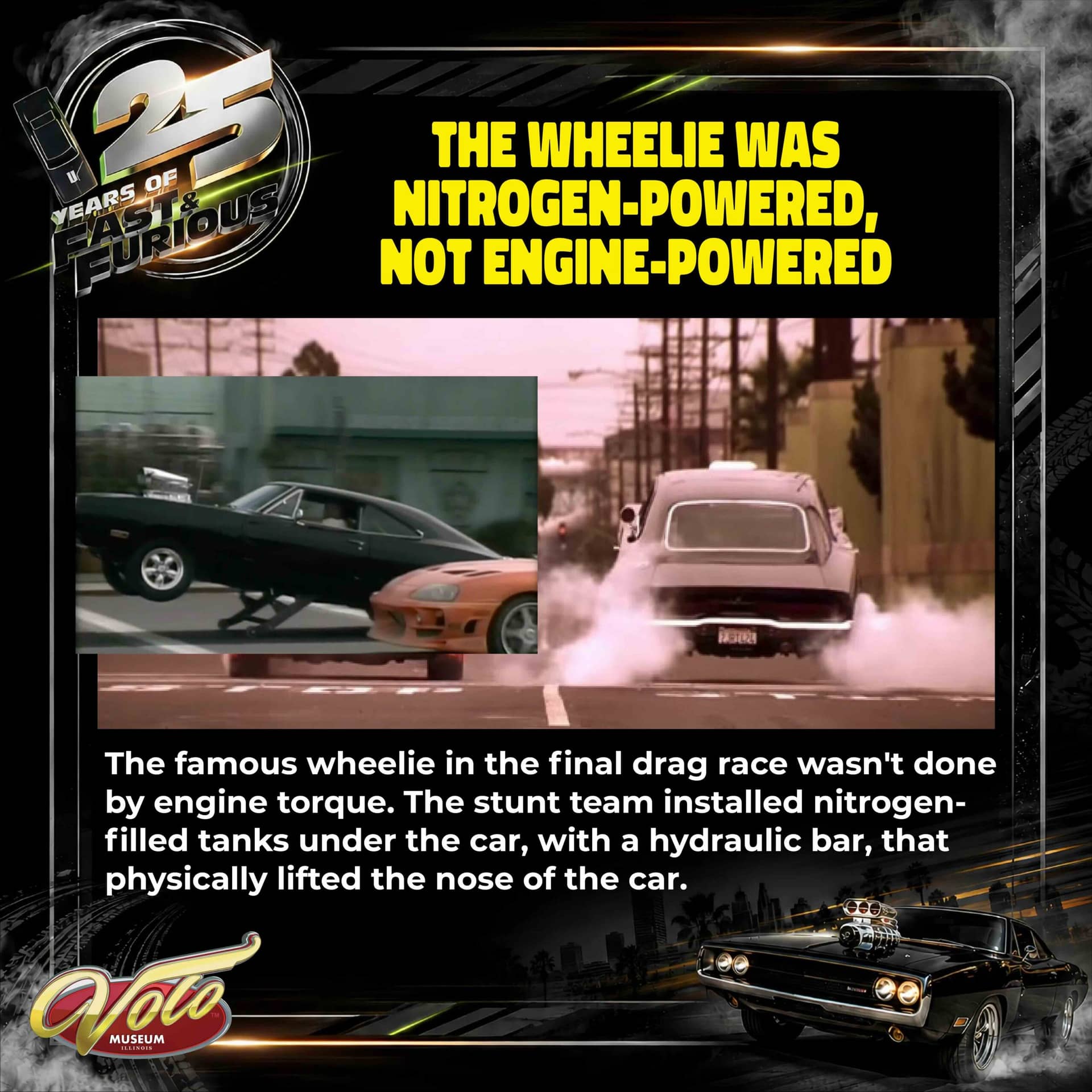
Few moments from the original The Fast and the Furious are as memorable as the climactic drag race between Dominic Toretto’s Dodge Charger and Brian O’Conner’s Toyota Supra. As the race begins, the Charger dramatically launches skyward, lifting its front wheels off the pavement in a spectacular wheelie that instantly became one of the franchise’s defining images. To audiences, it looked like a raw display of overwhelming horsepower and torque.
Behind the scenes, however, the stunt required a little Hollywood ingenuity. Rather than relying solely on engine power to raise the front end, the stunt team engineered a specialized system underneath the car that used nitrogen-filled tanks and hydraulics to physically lift the nose of the Charger during launch. The effect created a controlled, repeatable wheelie that could be captured safely and consistently on camera while delivering the dramatic visual impact the filmmakers wanted.
The result was movie magic at its finest. While the stunt may not have been powered by the engine alone, it perfectly conveyed the legend surrounding Dom’s Charger—a car portrayed as so powerful that it struggled to keep all four tires on the ground. More than two decades later, that launch scene remains one of the most iconic moments in automotive movie history and continues to be celebrated by fans around the world.
Movie Editing Created the Perfect Illusion
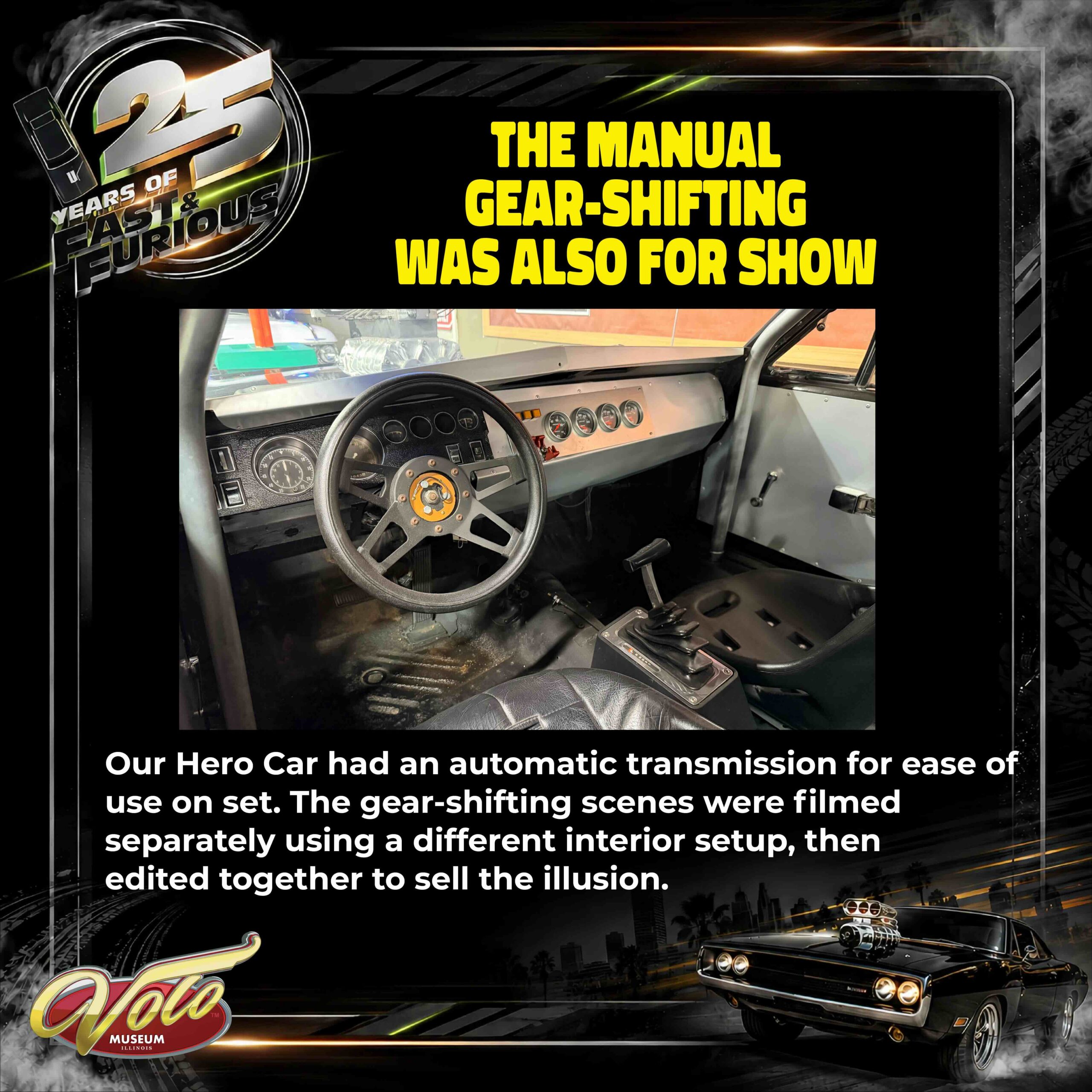
One of the lesser-known secrets behind Dominic Toretto’s legendary Charger involves what was happening inside the car. Throughout the film, audiences see dramatic gear changes, aggressive shifting, and scenes that suggest a high-performance manual transmission. Those moments helped reinforce the image of Dom as a driver completely connected to his machine, controlling every ounce of the Charger’s power.
Behind the scenes, however, practicality often took priority over realism. The hero car used for filming was equipped with an automatic transmission, making it easier and more reliable to operate during production. For the close-up driving sequences, the filmmakers used creative editing techniques and alternate interior setups to capture the manual-shifting shots audiences see on screen. By combining footage from different sources, they created a seamless illusion that most viewers never questioned.
This clever bit of filmmaking is another reminder that movie magic often happens in the editing room. While the Charger may not have been shifting gears the way it appeared on screen, the final result helped establish the car’s larger-than-life personality. The illusion was so convincing that many fans still assume the car featured a manual transmission, proving just how effective the filmmakers were at blending authenticity with storytelling.
The Sound of Power Was Added in Post-Production
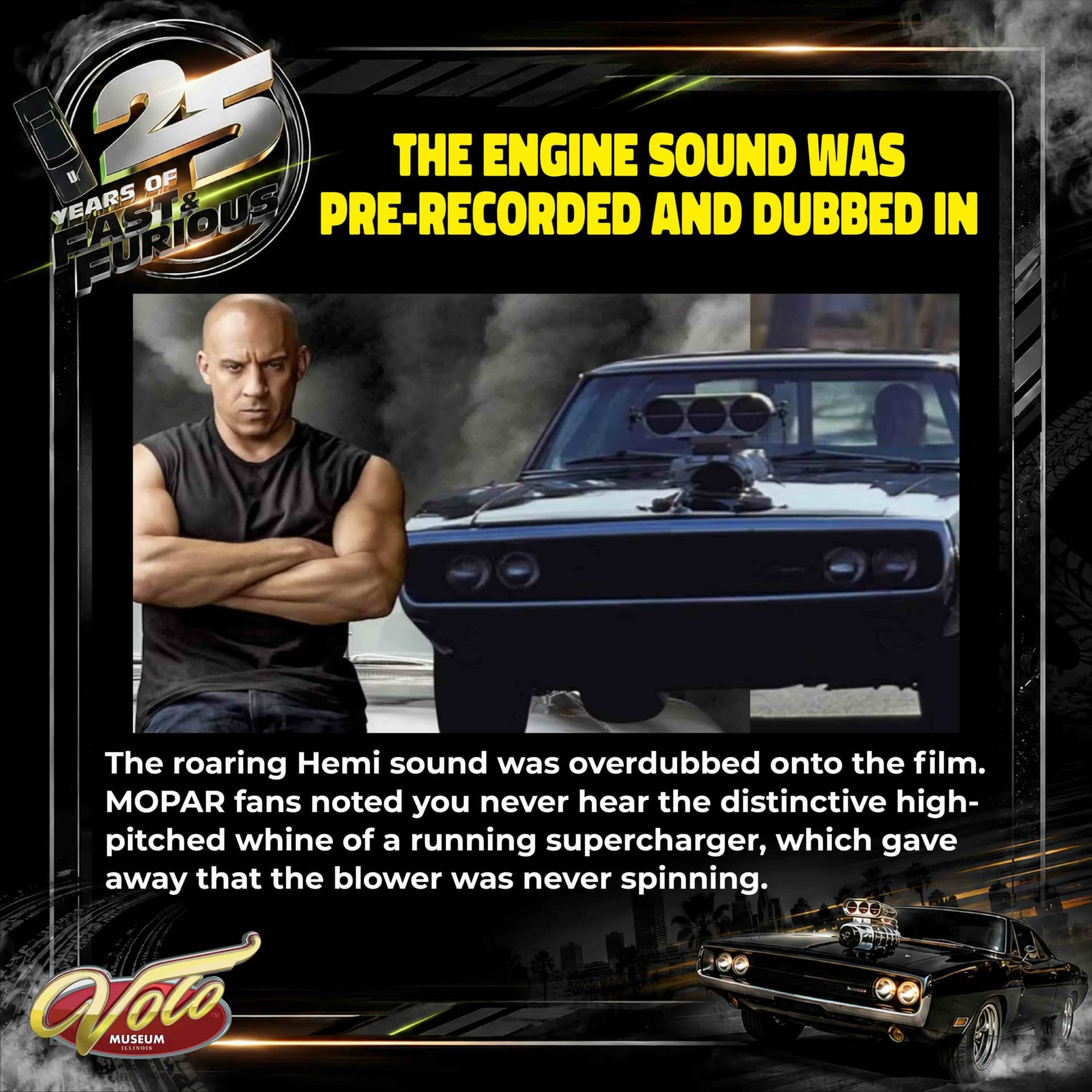
A big part of what made Dominic Toretto’s Charger feel so intimidating wasn’t just what audiences saw—it was what they heard. Every thunderous rev, aggressive idle, and roaring acceleration helped establish the car as a nearly mythical machine. The sound design played a critical role in building the Charger’s larger-than-life reputation and making it one of the most memorable vehicles in movie history.
What many fans don’t realize is that much of that audio was enhanced during post-production. Rather than relying entirely on sounds recorded during filming, the production team layered and dubbed engine noises over the footage to create the perfect soundtrack for the car’s on-screen presence. This allowed filmmakers to exaggerate the power and personality of the Charger while ensuring consistent audio quality throughout the film.
Automotive enthusiasts were quick to notice some clues. A true supercharged engine typically produces a distinctive high-pitched whine as the blower spins under load. Because the Charger’s famous supercharger was a non-functional prop, that characteristic sound was absent. Instead, the filmmakers focused on creating a deep, aggressive V8 soundtrack that matched audiences’ expectations and reinforced the car’s fearsome image. The result was a soundscape that became every bit as iconic as the Charger itself.
From Movie Prop to Automotive Legend
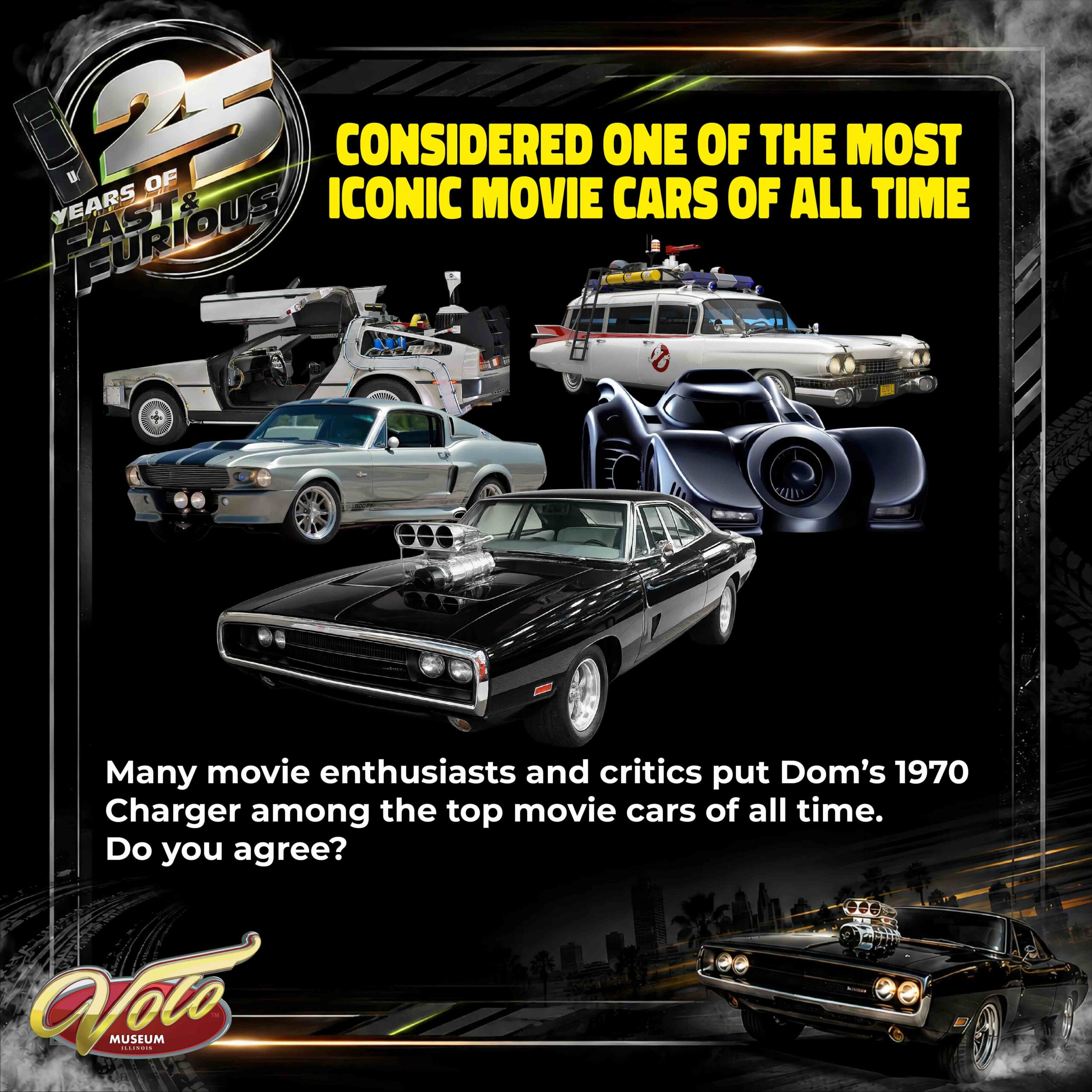
Every generation has its defining movie cars—vehicles that become just as memorable as the characters who drive them. From time-traveling machines and superhero rides to classic muscle cars and futuristic creations, only a select few earn a permanent place in pop-culture history. Among that elite group, Dominic Toretto’s 1970 Dodge Charger has secured a spot that few would dispute.
What makes the Charger so special is that it represents far more than transportation. Throughout the original The Fast and the Furious, the car symbolized family, legacy, power, and respect. It was introduced as a machine so intimidating that even Dom himself treated it with caution. Its aggressive appearance, towering supercharger, and unforgettable drag-race finale helped cement its status as one of the most recognizable vehicles ever featured on film.
Over the past 25 years, the Charger has become an icon far beyond the Fast & Furious franchise. It has inspired countless custom builds, appeared in automotive collections around the world, and remains one of the most requested movie vehicles at museums and enthusiast events. Whether fans rank it alongside the DeLorean, the Batmobile, Ecto-1, or other legendary movie cars, there is little doubt that Dom’s Charger has earned its place among the most influential and beloved vehicles in cinematic history.
The Real Muscle Behind the Movie Car
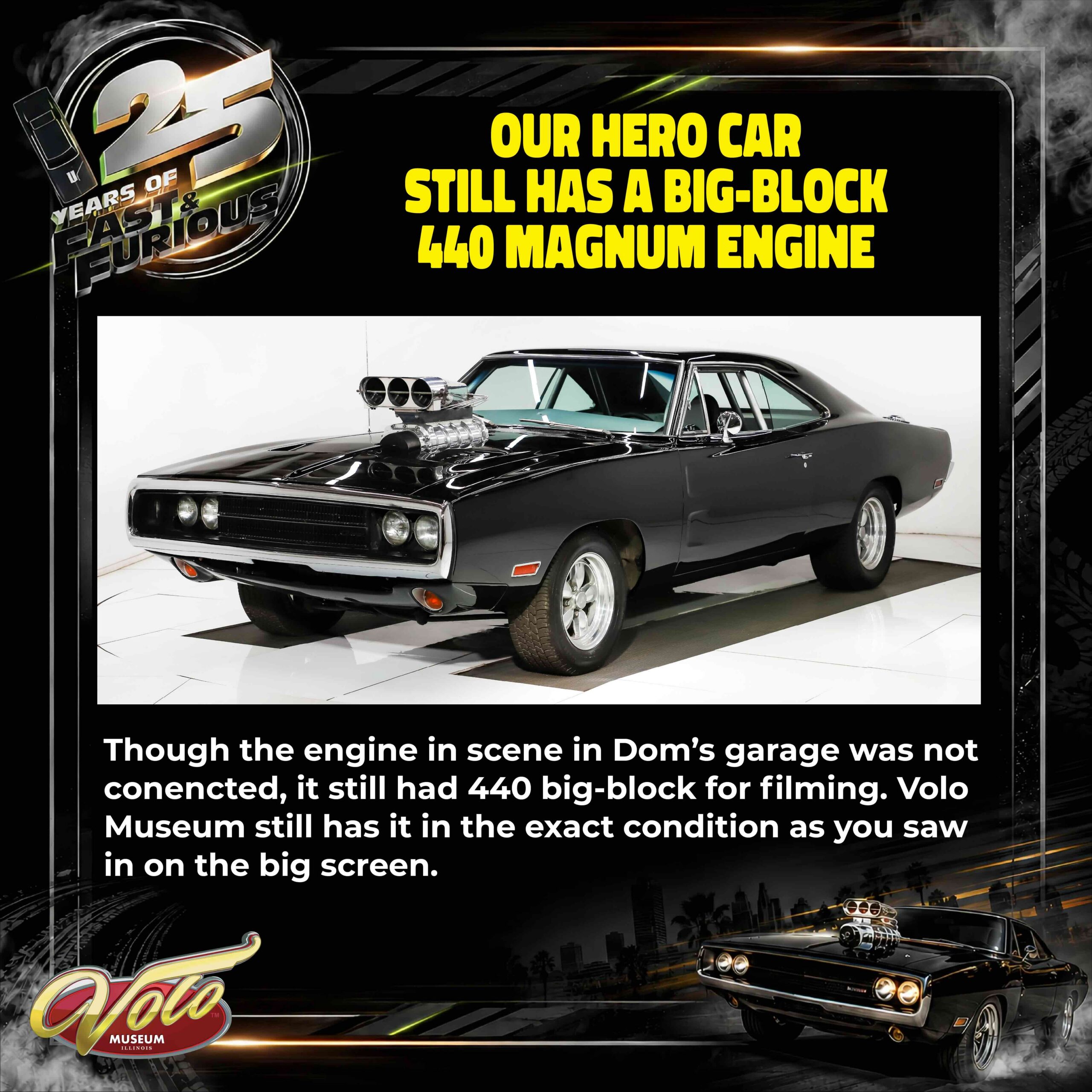
While many of the visual effects and performance cues used in The Fast and the Furious relied on Hollywood illusion, the hero Charger wasn’t simply an empty shell. Beneath the hood sat a genuine Mopar big-block 440 Magnum V8, giving the car authentic muscle-car credentials even if some of the movie’s most dramatic moments were enhanced for the camera.
The 440 Magnum was one of Chrysler’s most respected performance engines during the muscle car era, known for its impressive torque and strong street performance. Although it wasn’t the massive 528-cubic-inch Hemi featured in the garage scene, it was still a serious powerplant that perfectly matched the character of Dominic Toretto’s legendary Charger. The engine helped provide the authenticity needed for filming while maintaining the aggressive personality that audiences expected from the car.
Perhaps what makes this vehicle even more remarkable is how well it has been preserved. More than two decades after its appearance on the big screen, the hero car remains essentially unchanged from its movie appearance. Visitors can see the same black paint, the same iconic supercharger assembly, and the same 440 Magnum engine configuration that helped bring the Charger to life on screen. For fans of the franchise, it offers a rare opportunity to experience an authentic piece of automotive and cinematic history exactly as it appeared in the film.
Twenty-five years after its debut, The Fast and the Furious continues to influence automotive culture around the world. While many of the film’s most memorable moments relied on clever movie-making techniques, the passion, excitement, and authenticity that fueled the original production remain undeniable. From the legendary 1970 Dodge Charger to the behind-the-scenes secrets that brought it to life, the film created an enduring legacy that extends far beyond the screen. Today, fans have a unique opportunity to see the original hero car in person at Volo Museum, where this iconic piece of movie history continues to inspire new generations of enthusiasts and remind us why the original film became a cultural phenomenon.
Experience a Piece of Fast & Furious History
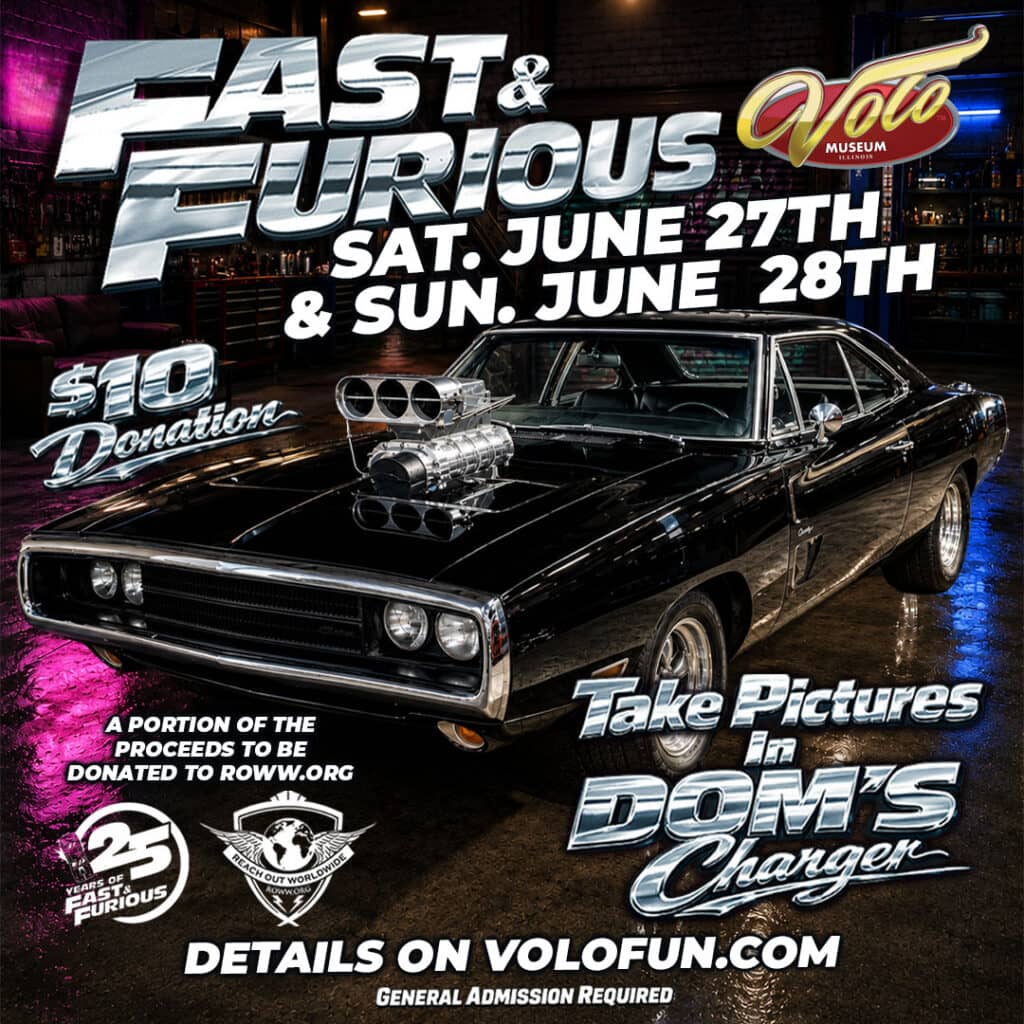
For fans of The Fast and the Furious, opportunities to get close to authentic screen-used vehicles are incredibly rare. That’s what makes Volo Museum’s 25th Anniversary celebration such a unique event. Visitors won’t just see Dominic Toretto’s legendary Charger from behind a rope—they’ll have the chance to stand beside one of the most recognizable movie cars ever built and capture a photo with a genuine piece of cinematic history.
The event celebrates the enduring legacy of the franchise that helped ignite a worldwide passion for car culture. For a special donation, guests can take photographs with the original screen-used hero Charger featured in the 2001 film. Whether you’re a lifelong Fast & Furious fan, a Mopar enthusiast, or simply someone who appreciates iconic movie vehicles, the experience offers a rare connection to one of Hollywood’s most influential automotive stars.
Even better, the event supports a meaningful cause. A portion of the proceeds benefits Reach Out Worldwide (ROWW), the charitable organization founded by the late Paul Walker. By participating, fans not only celebrate the film’s 25-year legacy but also contribute to an organization that continues Walker’s commitment to helping communities affected by natural disasters around the world.